The Great DDR5 Shortage: A Nerd’s Heroic Quest Through the Silicon Desert

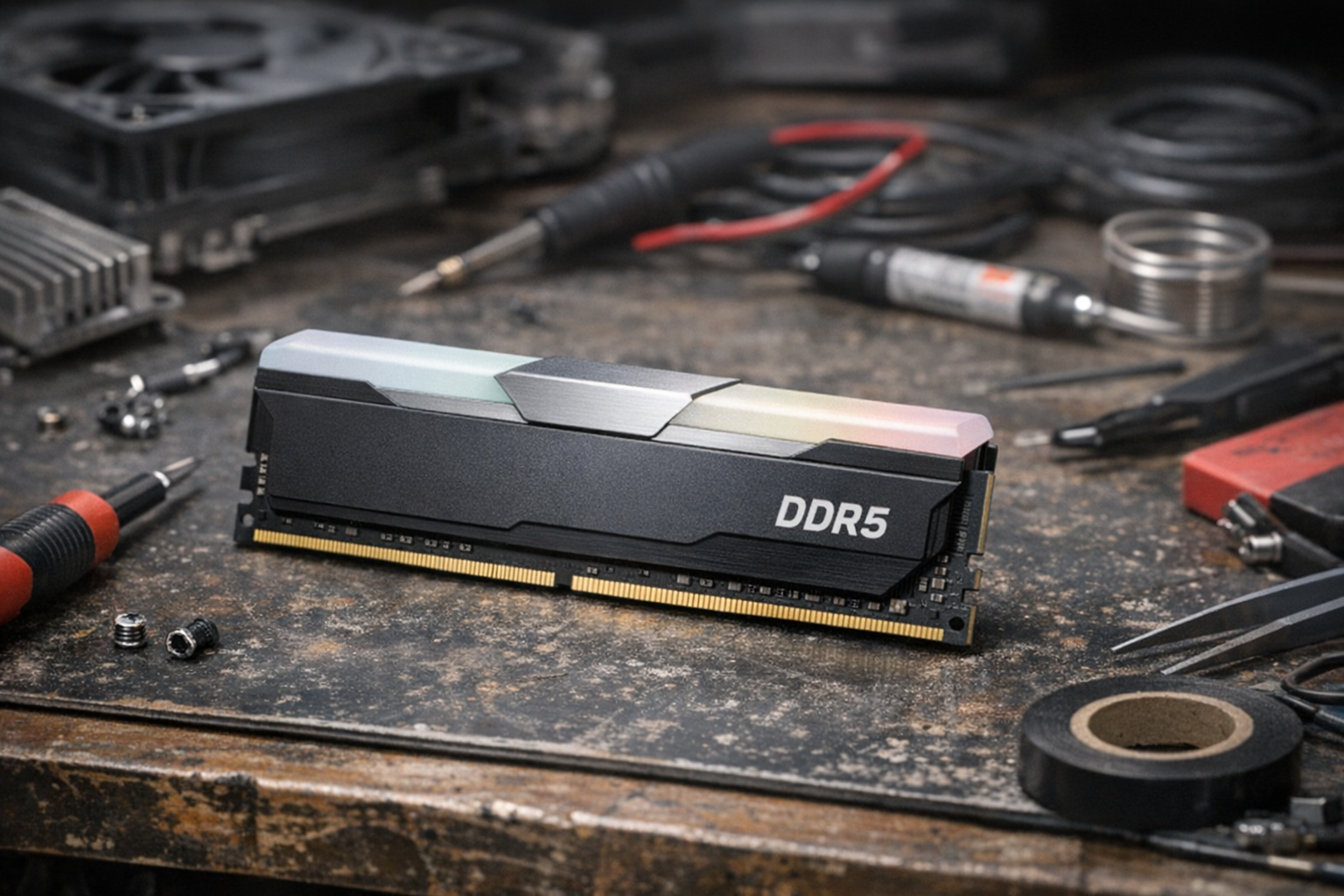
In the vast digital landscape of 2026, where GPUs reign supreme and CPUs evolve faster than memes, one component has become the rarest treasure of all: DDR5 RAM. Once hailed as the next evolutionary leap in memory technology, DDR5 has now become the stuff of legend—coveted, overpriced, and elusive (about GPUs, for a deeper look at how VRAM requirements impact gaming performance, check out this comprehensive analysis).
If you're a hardware enthusiast like me, a PC builder, or just a gamer trying to squeeze every last frame out of your rig, you've likely felt the sting of the DDR5 shortage. This isn't just a supply chain hiccup. It's a full-blown saga, complete with villains, quests, and the occasional comic relief. And like every good story, it begins with a call to adventure.
The Rise of DDR5: Promise Meets Reality
When DDR5 first hit the market, it promised everything a performance junkie could dream of: higher bandwidth, lower power consumption, and scalability that would future-proof your build for years. Enthusiasts rejoiced. Benchmarks soared. Motherboards adapted.
But as demand surged, reality hit hard. DDR5 modules became scarce, prices skyrocketed, and availability turned into a lottery. What was supposed to be a smooth transition from DDR4 became a chaotic scramble for scraps.
The Silicon Hunger Games: Why DDR5 Is So Hard to Find
To understand the shortage, we need to look beyond the shelves of your local tech store and into the heart of the global supply chain. The first major culprit? Artificial Intelligence.
AI workloads require massive amounts of memory, and data centers around the world have been gobbling up DDR5 like candy. Cloud providers, hyperscalers, and enterprise clients are buying in bulk, often securing entire production runs before they even leave the factory. For manufacturers, it's simple math: enterprise contracts are more lucrative than retail sales. And so, the average consumer is left fighting for leftovers.
But it's not just demand. DDR5 is harder to produce than its predecessor. It requires more advanced manufacturing techniques, tighter tolerances, and additional components like onboard power management ICs (PMICs). Yields are lower, costs are higher, and production lines are stretched thin.
Add to that the ripple effects of global logistics disruptions, geopolitical tensions, and the ever-present specter of inflation, and you have a perfect storm. The result? A memory market where DDR5 is both essential and unattainable.
The Nerd’s Quest: Building a Rig in the Age of Scarcity
For the modern PC builder, upgrading to DDR5 isn't just a technical decision—it's a heroic journey. You start with a dream: a new AM5 or LGA1700 build, optimized for gaming, streaming, or content creation. You research motherboards, compare CPUs, and plan your airflow like a seasoned architect.
But then comes the memory search. You scour forums, refresh price trackers, and dive into compatibility charts that read like ancient scrolls. You learn the difference between single-rank and dual-rank modules, memorize latency tables, and debate the merits of 6000 MHz vs 6400 MHz kits.
And just when you think you've found the perfect kit, it's either out of stock, priced like a luxury watch, or sold by a scalper with a suspiciously low seller rating.
This is the trial by fire. The moment where your patience, knowledge, and resourcefulness are tested. And if you emerge victorious—if you manage to secure a stable, high-performance DDR5 kit at a reasonable price—you earn your place among the legends of the build community.
The Comic Relief: Laughing Through the Pain
Of course, no epic tale is complete without a bit of humor. And the DDR5 saga has provided plenty of material.
There’s the irony of DDR4 kits being just as expensive now, while DDR5 modules cost more than a mid-range GPU. There’s the absurdity of seeing “deal alerts” for RAM priced at double its MSRP. And let’s not forget the YouTubers who keep saying “just wait for prices to drop,” as if time itself will magically fix the market.
In the forums, memes abound. Builders joke about trading organs for RAM, or embarking on pilgrimages to microcenters in distant lands. It’s a coping mechanism, sure—but also a testament to the resilience and creativity of the community.
The Deep Dive: What’s Really Driving the DDR5 Shortage?
Let’s break down the core factors behind the scarcity:
- AI and Data Center Demand: Enterprise clients are buying DDR5 in bulk for machine learning and cloud workloads. This demand dwarfs consumer needs and skews supply priorities.
- Manufacturing Complexity: DDR5 requires more advanced fabrication, with lower yields and higher costs. PMIC integration adds another layer of difficulty.
- Limited Fab Capacity: Foundries are overwhelmed, and many are prioritizing HBM (High Bandwidth Memory) for GPUs over DDR5 for general use.
- Supply Chain Disruptions: Shipping delays, material shortages, and geopolitical instability continue to affect global logistics.
- Consumer Adoption Surge: With new CPU platforms requiring DDR5, demand has spiked among gamers, creators, and tech enthusiasts.
- Scalping and Speculation: As with GPUs during the crypto boom, scalpers have entered the RAM market, inflating prices and hoarding inventory.
The Forecast: When Will DDR5 Prices Normalize?
Industry analysts suggest that relief may come in early 2026, as new fabs come online and enterprise demand stabilizes. But it’s a cautious optimism. Much depends on macroeconomic trends, technological shifts, and the unpredictable whims of the AI sector.
In the meantime, prices may fluctuate, availability may remain spotty, and builders will need to stay vigilant.
The Survival Guide: How to Navigate the DDR5 Wasteland
If you're determined to upgrade, here are some practical strategies:
- Aim for the Sweet Spot: 6000 MHz CL30 kits offer excellent performance without the premium price tag of ultra-high-frequency modules.
- Use Price Trackers: Tools like PCPartPicker, Keepa, and CamelCamelCamel can alert you to deals and stock changes.
- Consider Used Kits: With caution, buying second-hand can be a viable option. Look for reputable sellers and test thoroughly.
- Avoid Unknown Brands: Stick to trusted manufacturers like Corsair, G.Skill, Kingston, and Crucial. Stability matters.
- Don’t Overpay for Speed: Beyond a certain point, higher frequencies yield diminishing returns. Focus on latency and compatibility.
- Stay on DDR4 if Needed: If your current setup is stable and performant, there’s no shame in waiting. DDR4 remains a solid choice for most workloads.
The Final Word: A Community Forged in Scarcity
The DDR5 shortage has tested the mettle of builders everywhere. It’s forced us to adapt, learn, and innovate. But it’s also brought us together—through forums, subreddits, Discord channels, and late-night troubleshooting sessions.
In a way, the scarcity has become a rite of passage. A shared experience that turns casual users into seasoned veterans. And when the market finally stabilizes, when DDR5 becomes accessible, we’ll look back on this era not just with frustration, but with pride.
Because we endured. We built. We optimized. And we did it all in the face of adversity.
So here’s to the nerds. The geeks. The unsung heroes of the silicon frontier.
Your quest continues. And the next chapter is yours to write.