5800X3D and 5700X3D Shortage: Alternatives for AM4 Platform Success

Hey again, fellow tech-hoarder! Remember our recent chat about how buying used is often the secret level of PC building? Well, today we’re staring at a specific tragedy in that world.
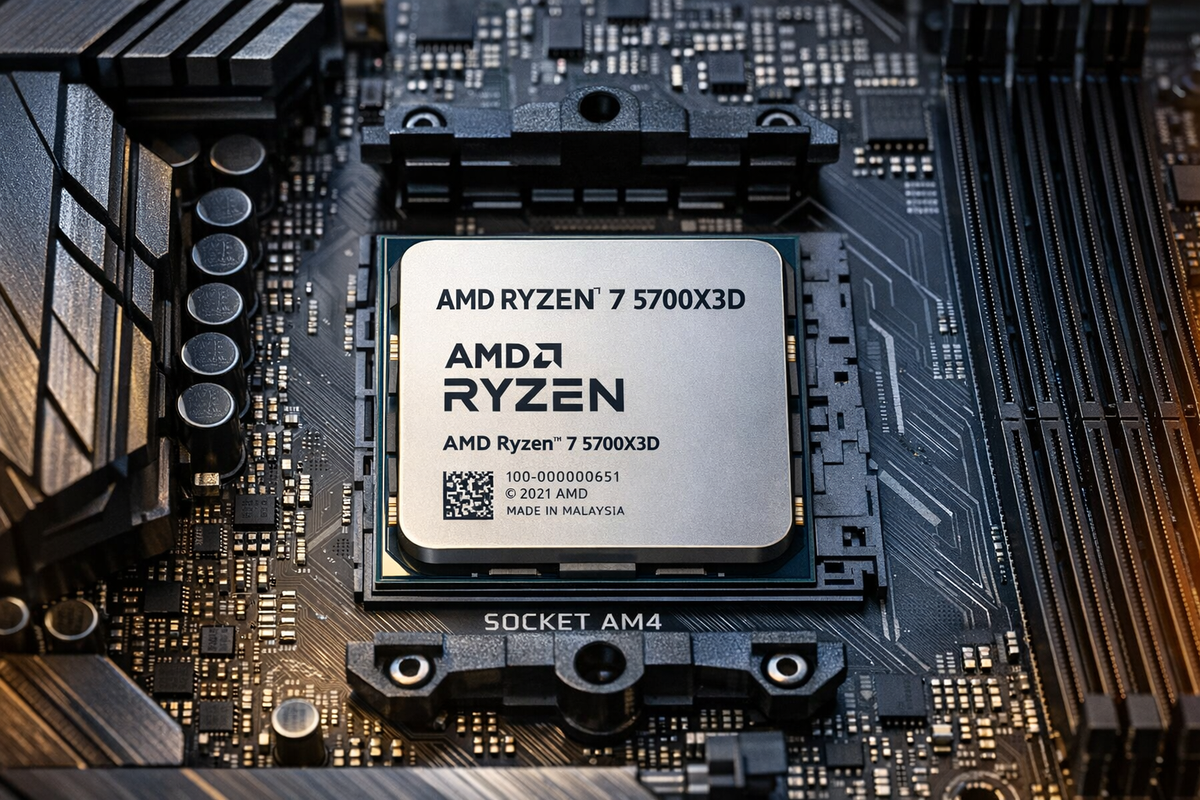
If the AM4 platform were a person, it would be that legendary rockstar who announced a "final tour" back in 2022 and is somehow still selling out stadiums in 2026. But even the greatest legends eventually run out of merch. We are officially entering the "Great X3D Famine." The Ryzen 7 5800X3D and its slightly more affordable sibling, the 5700X3D, have transitioned from "best-buy recommendations" to "rare artifacts" that you might only find in the dusty corners of eBay or in the hands of sellers asking for your firstborn child in exchange.
Don’t panic. Your motherboard isn't a paperweight yet. As your neighborhood "next-door geek friend," I’m here to tell you that while the kings of AM4 are leaving the building, the party isn't over. Let’s look at how to navigate this shortage without losing your mind—or your entire savings account.
The AM4 platform's best gaming CPUs have become nearly impossible to find. AMD has stopped shipping the Ryzen 7 5700X3D, and the 5800X3D is getting harder to locate at reasonable prices. If you're looking to maximize your AM4 system's gaming performance, you need to know which alternatives actually deliver results.
The good news is that several CPUs can still bring your AM4 platform to top-tier gaming performance, from remaining X3D chips to strategic platform upgrades that make more sense than overpaying for scarce processors. The Ryzen 7 5800X3D remains the fastest gaming CPU for AM4, but availability varies and prices have shifted since the 5700X3D shortage began.
Your best move depends on your specific situation. You might find a better deal on a remaining 5800X3D, score an exclusive chip if you live near certain retailers, or discover that upgrading to a newer platform makes more financial sense than chasing discontinued AM4 processors. We'll break down each option so you can make the right choice for your gaming rig.
Key Takeaways
- The Ryzen 7 5800X3D is worth buying if priced within $50 of what third-party sellers charge for the discontinued 5700X3D
- Moving to AM5 with a budget CPU gives you a clear upgrade path instead of investing in a platform that won't receive new processors
- Intel's Core i5-13600K and 14600K offer strong gaming performance plus better productivity capabilities for users who need both
Understanding the 5800X3D and 5700X3D Shortage
AMD discontinued both the Ryzen 7 5800X3D in late 2024 and the Ryzen 7 5700X3D earlier in 2026, leaving AM4 enthusiasts without access to the platform's most powerful gaming processors. These chips vanished from retail shelves as production ended, creating a gap in the budget gaming market just as DDR5 memory prices climbed.
Reasons Behind the 3D V-Cache CPU Sellout
The shortage stems from AMD's decision to end production of its Zen 3 processors with 3D V-Cache technology for the AM4 platform. You'll find that the Ryzen 7 5700X3D reached its end of life status, with AMD ceasing shipments to retailers and distributors.
The timing created perfect storm conditions. DDR5 memory prices have jumped significantly, making AM5 platform builds much more expensive than before. This drove increased demand for AM4 components right as AMD pulled these products from production.
Your search for these CPUs likely turns up empty or overpriced listings. Retailers no longer receive new stock from AMD. The 5800X3D stopped shipping first, followed by the 5700X3D months later.
AMD focused its manufacturing resources on newer platforms and chips. The company prioritized AM5 processors like the Ryzen 7 7800X3D and Ryzen 7 9800X3D over legacy AM4 products.
End of Life Status and Official Statements
AMD officially ended production of both eight-core 3D V-Cache processors for AM4. The 5800X3D was discontinued in late 2024, marking the first casualty among the X3D lineup.
The 5700X3D is no longer supplied to retailers, effectively ending AMD's eight-core Zen 3 3D V-Cache processor availability. This represents the final chapter for high-performance gaming chips on the AM4 socket.
You won't find official restart announcements from AMD. The company has not indicated plans to resume manufacturing these processors despite market demand.
Impact on the AM4 Enthusiast Community
The discontinuation hits AM4 users hard. You lose access to the best gaming upgrade path for your existing motherboard and DDR4 memory setup.
These X3D-enhanced Zen 3 CPUs remain gaming powerhouses even in 2026. Testing shows the 5800X3D still competes with newer processors in gaming workloads, matching chips like the Intel Core i5-14600K.
Your upgrade options now require either hunting used markets or switching to AM5 entirely. The AM5 transition means buying a new motherboard and expensive DDR5 memory on top of the CPU cost.
The shortage created a secondary market pricing problem. You'll pay inflated prices for remaining stock if you find any at all.
Performance and Value of 3D V-Cache CPUs for AM4
The 3D V-Cache technology brings major gaming improvements to AM4 CPUs through expanded L3 cache, while the 5700X3D offers similar performance to the 5800X3D at lower power consumption and cost.
How 3D V-Cache Enhances Gaming
AMD's 3D V-Cache technology stacks additional L3 cache directly on top of the CPU die. This gives your processor much faster access to game data without needing to fetch it from RAM.
The Ryzen 7 5800X3D features 96MB of L3 cache compared to 32MB on standard Ryzen chips. This extra cache keeps more game assets readily available for your CPU cores. Games that rely heavily on fast data access see the biggest improvements.
When you play modern games, the expanded cache reduces memory latency. Your CPU can pull textures, game logic, and world data from the stacked cache instead of slower system memory. This is why the 5800X3D delivers excellent gaming performance even compared to newer generation processors.
The technology works best in games with large open worlds or complex simulations. Titles that need to load lots of different assets benefit most from the increased cache size.
Technical Comparison: 5700X3D vs 5800X3D
| Specification | Ryzen 7 5700X3D | Ryzen 7 5800X3D |
|---|---|---|
| Base Clock | 3.0 GHz | 3.4 GHz |
| Boost Clock | 4.1 GHz | 4.5 GHz |
| TDP | 105W | 105W |
| L3 Cache | 96MB | 96MB |
| Cores/Threads | 8/16 | 8/16 |
The 5700X3D runs at lower clock speeds than the 5800X3D. Your boost frequency drops from 4.5 GHz to 4.1 GHz with the cheaper model.
Both CPUs share the same 96MB of 3D V-Cache. This means your gaming performance stays very close between the two chips. The clock speed difference typically results in only 3-5% lower frame rates with the 5700X3D.
The 5700X3D was designed as a more affordable option for your AM4 platform. You get nearly identical cache benefits at a lower price point, making it the better value choice for gaming-focused builds.
Productivity and Mixed-Use Scenarios
Your 3D V-Cache CPUs excel at gaming but face limitations in productivity applications. The lower clock speeds and restricted overclocking mean these chips don't lead in rendering or encoding tasks.
Standard Ryzen CPUs without 3D V-Cache often perform better in applications like video editing or 3D modeling. These programs benefit more from higher clock speeds than expanded cache. You'll see faster compile times and better multi-threaded performance with regular Ryzen 7 5800X processors in many productivity workloads.
If you need a balanced system for both gaming and content creation, consider your priorities. The 5800X3D and 5700X3D still handle productivity tasks well enough for most users. Your gaming performance gains typically outweigh the small productivity compromises for mixed-use scenarios.
Viable Alternatives to 5800X3D and 5700X3D on AM4
The AM4 platform still offers several CPU options when the X3D chips are unavailable. You can find CPUs with 3D V-Cache technology in limited markets or opt for traditional Ryzen processors that deliver solid gaming performance.
Ryzen 5 5600X3D and Regional Exclusivity
The Ryzen 5 5600X3D brings 3D V-Cache to a more affordable price point, but you'll face challenges finding it. This processor was released as a limited edition through specific retailers like Micro Center in the United States. It features six cores with AMD's stacked cache technology.
Key specifications:
- 6 cores, 12 threads
- 96MB L3 cache with 3D V-Cache
- Base clock: 3.3 GHz
Getting harder to find and climbs in price quickly, the 5600X3D offers most of the gaming performance benefits of its eight-core siblings. Your performance will be within a few percentage points of the 5800X3D in most games. The main limitation is availability outside North America and the chip's six-core design, which may show its age in heavily threaded games.
Non-X3D Ryzen Upgrades: 5700X, 5600X, and 5600
You can still find meaningful upgrades on the AM4 platform without 3D V-Cache technology. The Ryzen 7 5700X, Ryzen 5 5600X, and Ryzen 5 5600 remain widely available at lower prices than their X3D counterparts.
The Ryzen 7 5700X provides eight cores at a budget price. You'll get similar multi-threaded performance to the 5800X3D in productivity tasks, though gaming performance lags behind by 15-20%. It's a practical choice when you need core count for streaming or content creation.
The Ryzen 5 5600X and Ryzen 5 5600 deliver six cores with higher clock speeds than the 5600X3D. Your gaming performance will be adequate in most titles, especially when paired with mid-range graphics cards. These CPUs excel in games that don't benefit heavily from large cache sizes. The 5600 typically costs $100-150, making it the most budget-friendly option on the AM4 platform.
Ryzen 5 5500X3D and Market Availability
The Ryzen 5 5500X3D exists primarily in Asian markets, particularly China. AMD never officially launched this processor in Western regions. It features six cores with 3D V-Cache technology similar to the 5600X3D.
You'll struggle to purchase this CPU through standard retail channels in North America or Europe. Import options exist, but warranty support and compatibility verification become your responsibility. The performance sits between the 5600X3D and standard 5600X, offering a middle ground that's only practical if you're in supported markets or willing to navigate gray market imports.
Transitioning Beyond AM4: AM5 and Competing Platforms
Moving to AM5 offers access to newer CPU architectures and modern memory standards, though it requires replacing both your motherboard and RAM. The platform supports Zen 4 and Zen 5 processors with DDR5 memory, providing a clear upgrade path for several years.
Benefits of Upgrading to AM5
The AM5 platform brings significant improvements over AM4's aging DDR4 infrastructure. You get native DDR5 support, which delivers higher bandwidth that benefits memory-sensitive games and applications. PCIe 5.0 support is also standard, preparing your system for future graphics cards and storage devices.
AMD has committed to supporting AM5 through at least 2027. This means you can start with a budget processor and upgrade to more powerful chips later without replacing your motherboard. The platform also supports newer connectivity standards like USB4 and Wi-Fi 7 on compatible motherboards.
Power delivery on AM5 motherboards is generally more robust than older AM4 boards. This helps maintain stable performance under heavy workloads. The socket itself uses an LGA design instead of AM4's PGA pins, which reduces the risk of damaging your processor during installation.
AM5-Compatible CPUs: Zen 4 and Zen 5
The Ryzen 7 7800X3D stands out as the most popular gaming processor on AM5, delivering performance that matches or beats the 5800X3D in most games. Its 3D V-Cache technology provides excellent frame rates while staying relatively affordable compared to higher-tier options.
For those seeking maximum gaming performance, the Ryzen 7 9800X3D represents the current flagship. Testing shows it's approximately 35% faster than the 5800X3D in gaming workloads. It combines Zen 5 architecture improvements with enhanced 3D V-Cache implementation.
Budget-conscious builders can consider the Ryzen 5 7500F or Ryzen 5 9600X. Both processors deliver gaming performance similar to the 5800X3D while costing significantly less. The 9600X typically sells for around $200, making it an attractive entry point into the AM5 platform.
The Ryzen 9000 series brings efficiency improvements alongside modest performance gains over Zen 4. These chips run cooler and consume less power while maintaining competitive gaming and productivity performance.
Memory and Motherboard Considerations
DDR5 memory is required for all AM5 systems, which adds to the initial cost of upgrading. Current pricing has improved significantly since DDR5's launch, with 32GB kits now available at reasonable prices. You'll want DDR5-6000 CL30 as the baseline, since this speed offers the best performance-to-cost ratio for Zen 4 and Zen 5 processors.
AM5 motherboards come in three main chipsets: B650, X670, and X870. B650 boards provide everything most users need, including DDR5 support and PCIe 4.0. X670 and X870 boards add more PCIe 5.0 lanes and USB ports, but these features aren't essential for gaming builds.
You can reuse your existing AM4 cooler on AM5 if it uses the standard mounting system. Most coolers with AM4 brackets work directly on AM5 without modifications. This helps offset some of the platform transition costs.
Motherboard prices start around $125 for basic B650 models and climb to $300+ for feature-rich X870 boards. Your choice depends on how many storage drives, USB devices, and expansion cards you plan to use.
Intel and Modern AMD Alternatives for Maximum Performance
Moving beyond the AM4 platform opens up options with significantly higher performance ceilings. The Intel Core i5-13600K delivers exceptional multi-threaded performance while newer AM5 processors offer better upgrade paths for the future.
Intel Core i5-13600K and Other Intel CPUs
The Intel Core i5-13600K stands out as a strong alternative if you're willing to switch platforms entirely. This chip combines 6 performance cores with 8 efficiency cores for a total of 14 cores and 20 threads. It matches or exceeds the 5800X3D in many gaming scenarios while crushing it in productivity workloads.
You'll need to factor in the cost of a new motherboard and DDR4 or DDR5 RAM depending on your board choice. The 13600K runs hotter than X3D chips and requires better cooling. Its hybrid architecture makes it ideal if you stream, edit videos, or run multiple applications while gaming.
The i5-14600K offers a minor refresh with slightly higher clock speeds. Both chips provide excellent value for users who need balanced performance across gaming and productivity tasks.
Latest-Generation AMD Ryzen Offerings
AMD's AM5 platform introduces the Ryzen 5 7600 as an affordable entry point to modern Zen 4 architecture. This 6-core chip trades blows with the 5700X3D in many games through raw clock speed advantages. The real benefit comes from the upgrade path since AM5 supports future Ryzen 9000 series processors.
The Ryzen 7 9800X3D represents the cutting edge of gaming performance with its updated 3D V-Cache design. Built on Zen 5 architecture, it delivers higher frame rates than any AM4 chip while maintaining excellent efficiency. The 9800X3D costs significantly more but future-proofs your system for years.
Mid-range options like the Ryzen 7 7700X or Ryzen 9 7900X provide strong multi-core performance. These CPUs work best for users who prioritize productivity alongside gaming.
Cost-Benefit Analysis for Platform Switching
Switching platforms requires careful budget consideration:
AM4 Upgrade Costs:
- 5800X3D: $250-$300 (CPU only)
- Uses existing motherboard and RAM
- No future upgrade path
New Platform Costs:
- Intel i5-13600K: $280 + $150 motherboard + $100 RAM = $530
- AM5 Ryzen 5 7600: $200 + $180 motherboard + $120 DDR5 = $500
You're looking at roughly $200-$250 more for a platform switch. The investment makes sense if you're building from scratch or plan to upgrade again within three years. Your existing AM4 system reaches its performance ceiling with the 5800X3D.
AM5 motherboards will support multiple CPU generations including future Zen 5 chips. This extends the useful life of your motherboard investment by several years compared to staying on AM4.
Optimizing Your AM4 System Amid Limited CPU Choices
Your AM4 platform can deliver excellent performance even without the hard-to-find 5800X3D or 5700X3D through targeted system optimizations. Key improvements include updating your motherboard BIOS, selecting fast RAM with tight timings, and implementing proper cooling solutions for overclocking.
Motherboard and BIOS Updates
Your motherboard's BIOS version directly impacts CPU compatibility and performance on the AM4 platform. Manufacturers released numerous updates between 2016 and 2026 that improved memory stability, boosted CPU performance, and fixed security vulnerabilities.
Check your motherboard manufacturer's website for the latest BIOS version compatible with your specific board model. You'll need to identify your exact motherboard model through your system information or by physically checking the board itself. Download the BIOS file and carefully follow the manufacturer's flashing instructions.
Important BIOS features to enable:
- Precision Boost Overdrive (PBO) for automatic CPU performance gains
- XMP/DOCP profiles for RAM speed optimization
- Smart Access Memory if you use an AMD graphics card
- Latest AGESA microcode for improved CPU compatibility
Never interrupt a BIOS update while it's in progress. Most modern motherboards include BIOS flashback features that let you recover from failed updates.
RAM and DRAM Selection for Lasting Performance
Your RAM speed and timings significantly impact AM4 CPU performance, especially with Ryzen 5000 series processors. AMD's Infinity Fabric connects CPU cores to memory, and its performance scales with RAM speed up to certain limits.
The sweet spot for most AM4 CPUs is DDR4-3600 with CL16 timings. This configuration provides the best balance between cost and performance. You can optimize your AM4 setup for gaming by upgrading to faster memory if you're currently running slower speeds like DDR4-2666 or DDR4-3200.
Recommended RAM specifications:
| CPU Generation | Ideal Speed | Timing | Capacity |
|---|---|---|---|
| Ryzen 3000 | DDR4-3600 | CL16-18 | 16GB |
| Ryzen 5000 | DDR4-3600 | CL14-16 | 16-32GB |
Install RAM in the correct slots (typically A2 and B2) for dual-channel operation. Your motherboard manual specifies the optimal configuration for maximum bandwidth.
Considerations for Overclocking and Cooling
Your AM4 CPU can deliver additional performance through overclocking, but this requires adequate cooling solutions. The Ryzen 7 5800X runs hot at its stock 105W TDP and reaches temperatures up to 92°C under load with standard air cooling.
Precision Boost Overdrive offers the safest overclocking method for AM4 CPUs without manually adjusting voltages. Enable PBO in your BIOS and set curve optimizer values to negative offsets between -10 and -30 per core. This approach reduces voltage while maintaining or improving boost clocks.
Cooling requirements by CPU tier:
- Budget CPUs (Ryzen 5 5500, 5600): Stock cooler or $30 tower cooler
- High-performance CPUs (5800X, 5900X): $50-80 tower cooler or 240mm AIO
- Overclocked CPUs: 280mm+ AIO or premium air cooler ($80+)
Monitor your temperatures using software like HWiNFO64 or Ryzen Master. Keep temperatures below 85°C under sustained loads for optimal longevity. Your case airflow also matters—ensure you have adequate intake and exhaust fans for proper circulation.
Conclusion: Don't Let FOMO Dictate Your Build
Look, it’s the end of an era. The 5800X3D was basically a "cheat code" for gamers, allowing us to stretch out our DDR4 systems way longer than anyone expected. But as much as we love that 3D V-Cache magic, we have to be realistic. If a seller is asking $500 for a used 5800X3D, they aren't your friend—they’re a scalper in geek's clothing.
At that price point, the "Geek-Friend" move is to walk away. Take that cash, sell your old AM4 board and RAM, and jump to AM5. You'll get a fresh warranty, faster DDR5 memory, and a CPU like the Ryzen 7600 or 9600X that will match those legendary X3D chips in most games anyway.
AM4 was a wild ride, and if you can snag a 5700X3D at a fair price, do it! It's a fantastic way to sunset your build. But if you can't? Don't sweat it. The future is DDR5-shaped, and it’s actually looking pretty bright. Or go for an amazing 5700x like I did (upgrade from a 5600g), paired with an amazing RX 9060 XT 16GB!
Still hunting for a specific chip or wondering if a used listing you found is a scam? Hit me up!
Frequently Asked Questions
The 5800X3D and 5700X3D are no longer in production, which has created supply issues and price increases across the used market. Understanding why these chips disappeared, what alternatives exist, and how to maximize your AM4 platform can help you make smart upgrade decisions.
Why is the Ryzen 7 5800X3D hard to find in stock right now?
AMD has discontinued the Ryzen 7 5800X3D, ending production of this popular gaming processor. The chip reached end-of-life status in late 2024 after nearly three years on the market.
You can't buy new units from regular retailers anymore. The only options are used marketplace listings, where prices have jumped to $450 or more for the processor that originally cost $450 at launch. Some listings on secondary markets show prices reaching $500 to $800, which exceeds what you'd pay for newer AM5 processors.
The shortage happened because AMD stopped supplying retailers as demand for AM4 processors declined. High prices on the used market reflect the chip's strong gaming performance and limited remaining inventory.
Is AMD still manufacturing the Ryzen 7 5700X3D, and how can you verify availability?
The Ryzen 7 5700X3D has reached end-of-life status, meaning AMD stopped making it. Production ended in late 2024 or early 2025, marking the conclusion of AMD's eight-core Zen 3 processors with 3D V-Cache technology.
The chip is no longer supplied to retailers. You can verify current availability by checking major online retailers like Amazon, Newegg, and Micro Center for new stock.
If you see listings, they're likely remaining inventory or used units. Prices for used 5700X3D processors range from $300 to $450 on marketplaces like eBay.
Which CPUs are the best drop-in AM4 alternatives when the 5700X3D and 5800X3D are unavailable?
The Ryzen 7 5800XT represents your best readily available option for AM4 gaming performance. It's a standard Zen 3 chip without 3D V-Cache but still delivers solid frame rates.
The Ryzen 7 5700X and Ryzen 5 5600X remain in stock at most retailers. These chips work well for gaming but don't match the X3D variants in cache-sensitive titles.
Your motherboard needs a BIOS update to support these processors if you're upgrading from an older Ryzen chip. Check your motherboard manufacturer's website for the latest BIOS version before buying.
The 5800XT performs about 29% slower than the 5800X3D in gaming benchmarks on average. That gap grows larger in games that benefit from extra cache, but shrinks in titles that rely more on memory bandwidth.
How does the Ryzen 7 5700X3D compare to the 5800X3D for gaming performance and value?
The 5700X3D runs about 5% slower than the 5800X3D in gaming performance across a range of modern titles. Both chips have the same 3D V-Cache technology, with the main difference being slightly lower clock speeds on the 5700X3D.
In most games, you won't notice the performance gap between these two processors. The 5700X3D originally launched at $249, making it a better value option compared to the 5800X3D's $450 price tag.
Current pricing eliminates any value argument for either chip. When the 5700X3D was available for $249, it made sense as an affordable AM4 upgrade path. At today's inflated used market prices, neither processor offers good value compared to budget AM5 options.
Is buying a 5800X3D from AliExpress or other marketplaces safe, and how do you avoid counterfeit listings?
Buying from international marketplaces carries significant risk for high-demand processors. You should verify seller ratings, return policies, and buyer protection coverage before purchasing.
Look for listings with detailed photos showing the actual processor's heat spreader markings. Authentic 5800X3D chips have specific manufacturing codes and AMD logos that counterfeiters often get wrong.
Request that sellers provide photos of the CPU-Z or HWiNFO readout showing the processor model and specifications. This helps confirm you're getting an authentic chip before you pay inflated prices.
eBay offers better buyer protection than most international marketplaces. You have recourse through their money-back guarantee if you receive a fake or misrepresented processor.
Consider the total cost including shipping and potential import duties. At current market prices, you're often better off buying a new AM5 processor and motherboard combo instead of overpaying for used AM4 hardware.
What upgrades (CPU, RAM, BIOS, cooling) most effectively push an AM4 system to near-top-tier performance today?
Your best available CPU upgrade is the Ryzen 7 5800XT or Ryzen 7 5700X if you can find them in stock. These chips require a BIOS update on most motherboards, so flash your BIOS before installing the new processor.
DDR4-3600 CL16 memory represents the sweet spot for AM4 gaming performance.